
Mirage II
by SASAKI Gakuto (b. 1983)
Heisei period, 2021
Dry lacquer form, kanshitsu, with innovative lacquer finishes, kawarinuri
31 x 16 x 7.5 (h) cm.
Sealed. Sealed wrapping cloth. Signed and sealed tomobako
Price: £6600
About
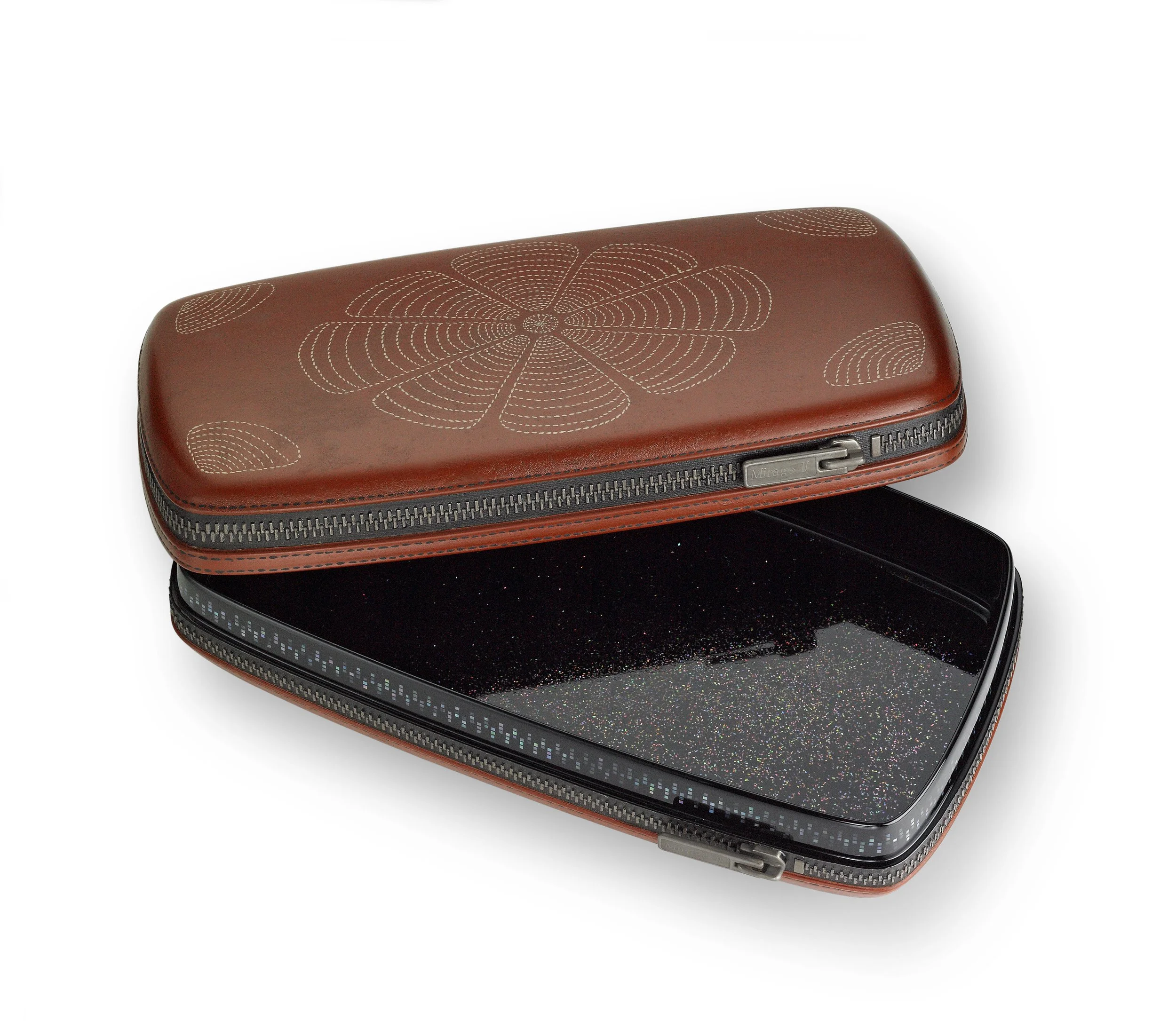
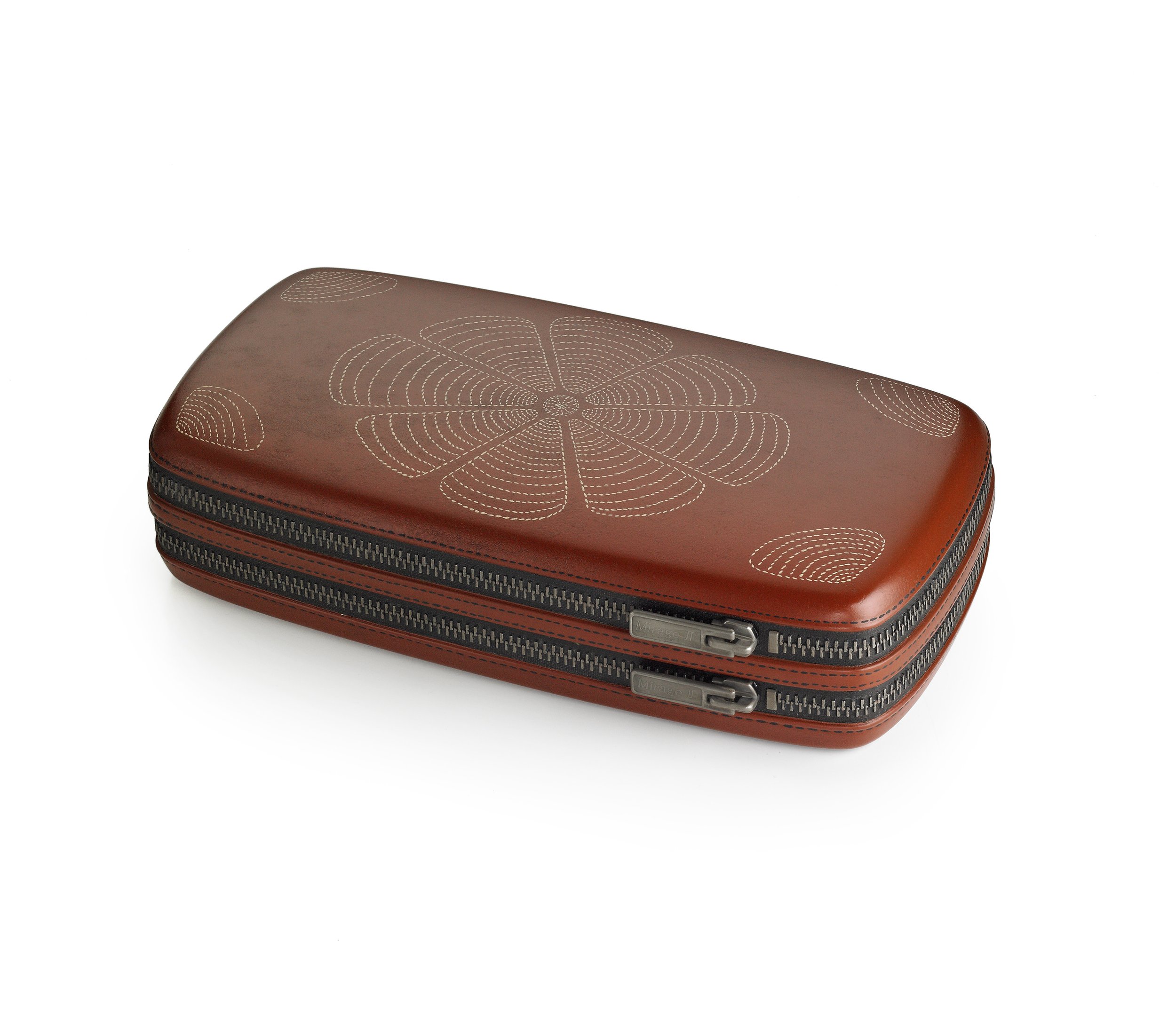
This work of Sasaki Gakuto invites the viewer to suspend preconceptions. At first sight the appearance is familiar - a high-grade, tooled leather box, with double zip fastenings. Touch it, however, and it is immediately apparent that the eye has been deceived. There is no leather, tooling, or metal zips. All is recreated in lacquer. Lifting the lid exposes a riser decorated with mother-of-pearl, raden, inlays in replication of the exterior metal zip, and an interior base of multi-coloured raden nashiji.
Sasaki explains:
In this work, deceptive elements are hidden in the function, texture, and form of the box. My aim is that when someone tries to open the box, they will feel as if they have been looking at a mirage. The pattern on the top of the lid is inspired by a Chinese folk tale in which smoke emitted by a giant clam creates a mirage. In this work, the shell is depicted as a stitch pattern, reminiscent of a modern radio wave (WiFi) symbol
For the Western viewer the question can be 'why go to the trouble?' Here our equivalent artistic tradition is seen in 'trompe-l'oeil' paintings (lit. deceive the eye) - a playfulness to intrigue and amuse. In Japanese lacquer art there is a similarly rich tradition, dating back to at least the 18th century, of using lacquer in replication of materials. The 19th-century artist, Shibata Zeshin, perfected such techniques. Sasaki-san is continuing this important tradition, bringing his work directly in line with contemporary values to question our current fascination with luxury goods.
Sasaki-san is fascinated by the concept of fine quality craft and the essential role that this plays in our daily lives. Focusing on a luxury item and recreating the work in lacquer, he questions our definitions of luxury, intrigues our vision and displays consummate skill in the creation of a fine quality work of art.
'Fine quality' always adds joy to our life and makes our life more colourful. I am hoping that great stories will be composed by using my works, and I will keep striving for this purpose. Craft work made by hand can be a turning point for us to consider what can be a truly wealthy life with fine quality in this society of mass consumption.