
Paper Storage Box
by MAE Taiho (1890 -1977)
Showa period, 1956
Coloured lacquers, chinkin technique
29.5 x 26.5 x 8.5(h) cm.
Sealed wrapping cloth
Signed. Signed and sealed tomobako
Price £7600
About
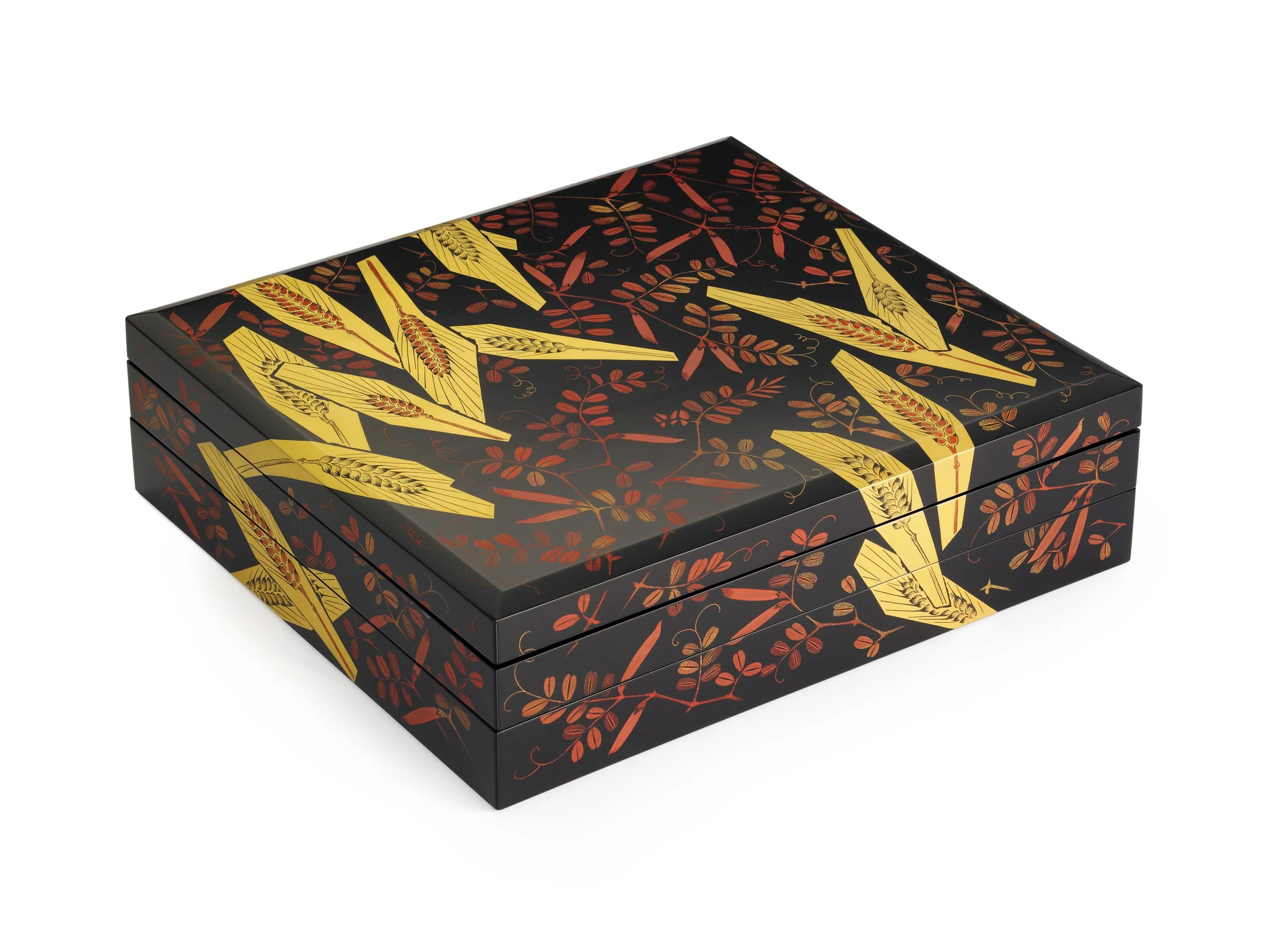
This two-tiered box for the storage of poem papers was shown at the 12th National Art Exhibition, the Nitten, in 1956. It was made by an artist who had, the previous year, been awarded the title of Living National Treasure for his outstanding skills in this particular lacquer technique – chinkin.
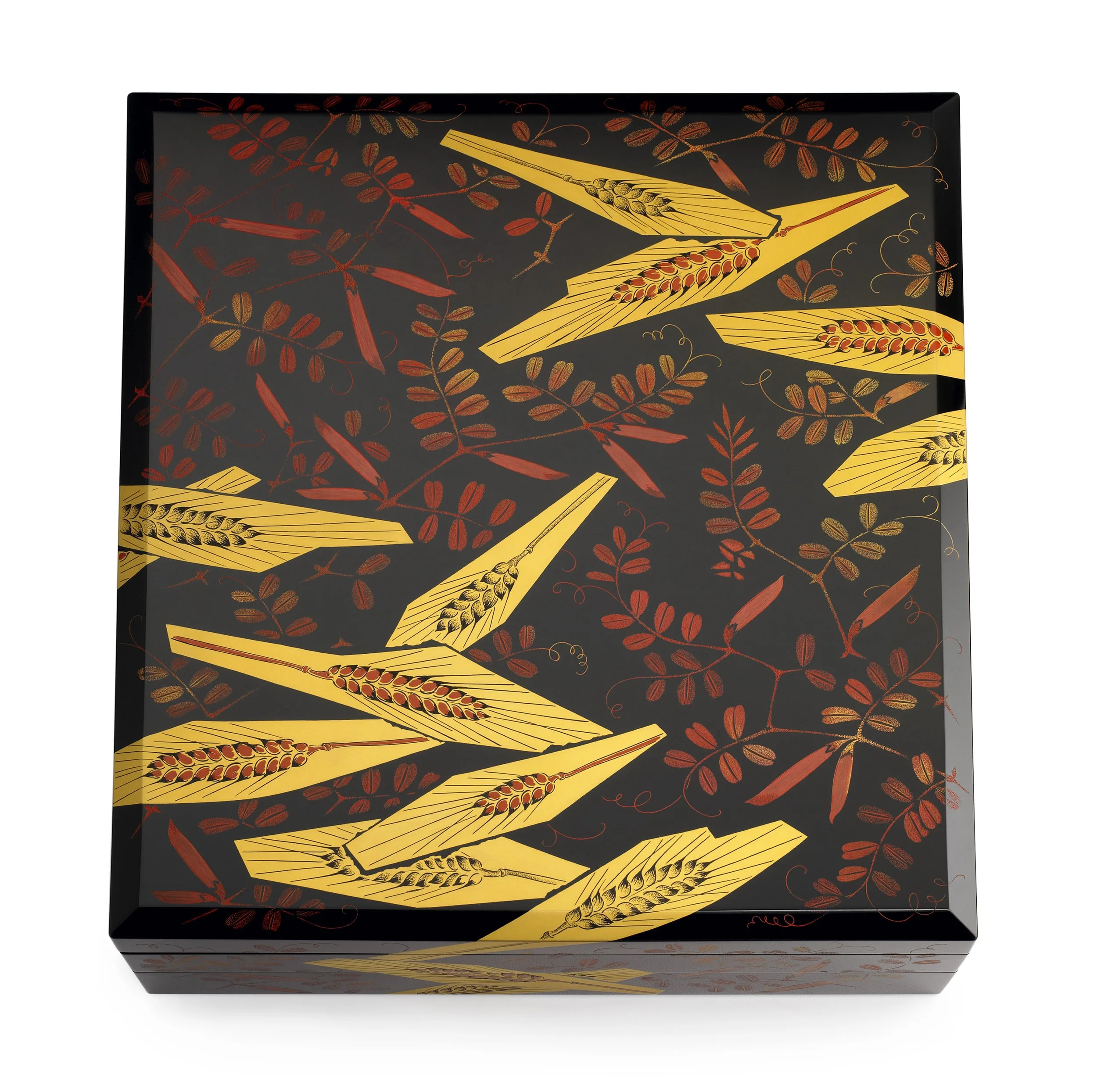
Its design depicts stylised patterns of the ears of wheat scattered across a ground of weeds. The importance of this food cereal is emphasised by its golden colour standing out against the black ground. The grains themselves are depicted alternately red and black. The background plants have lively variations of gold and pink.
The lacquer decorating technique of chinkin is closely associated with the town of Wajima – a pre-eminent centre for lacquerware production since the 14th century. In recognition of its cultural importance to Japan, Wajima-nuri was designated an essential traditional Japanese craft in 1975. In 1977 Japanese lacquerware was elevated to the status of an Intangible Cultural Property. Finally, in 1982, the tools used to create Wajima-nuri were also designated as being a Tangible Cultural Property.
Originating in China, the specific technique of chinkin involves first engraving the design onto a lacquer, traditionally black, ground. Wet lacquer is then rubbed into the incisions to provide adhesive for gold foil or powder which is applied to the design. The excess gold is then polished away so that the gold just highlights the design.
Work by Mae Taiho was first shown nationally at the prestigious annual National Art Exhibition, the Teiten, of 1939. Thereafter he was a regular exhibitor. Imperial commissions followed and many awards received. His son, Mae Fumio, is the current Living National Treasure for the chinkin technique.