
Writing Box
by KODA Shuetsu (1881–1933)
Late Taisho/early Showa period, 1920-30
Gold and black makie with shell inlay
21.5 x 18.5 x 3 cm. Signed on base. Two brushes
Original signed and sealed storage box
Price: POA
About
This delicate design takes as its theme a poem by Kagawa Kageki (1768-1843):
Shirikawa no sue no kusakawa
fuyugarete hosoki nagare ni
chidori nakunari
“The end of the Shirakawa river is full of grasses, but they wither in winter, when the sound of the plover’s call is heard above the grassless, thinly flowing, river”
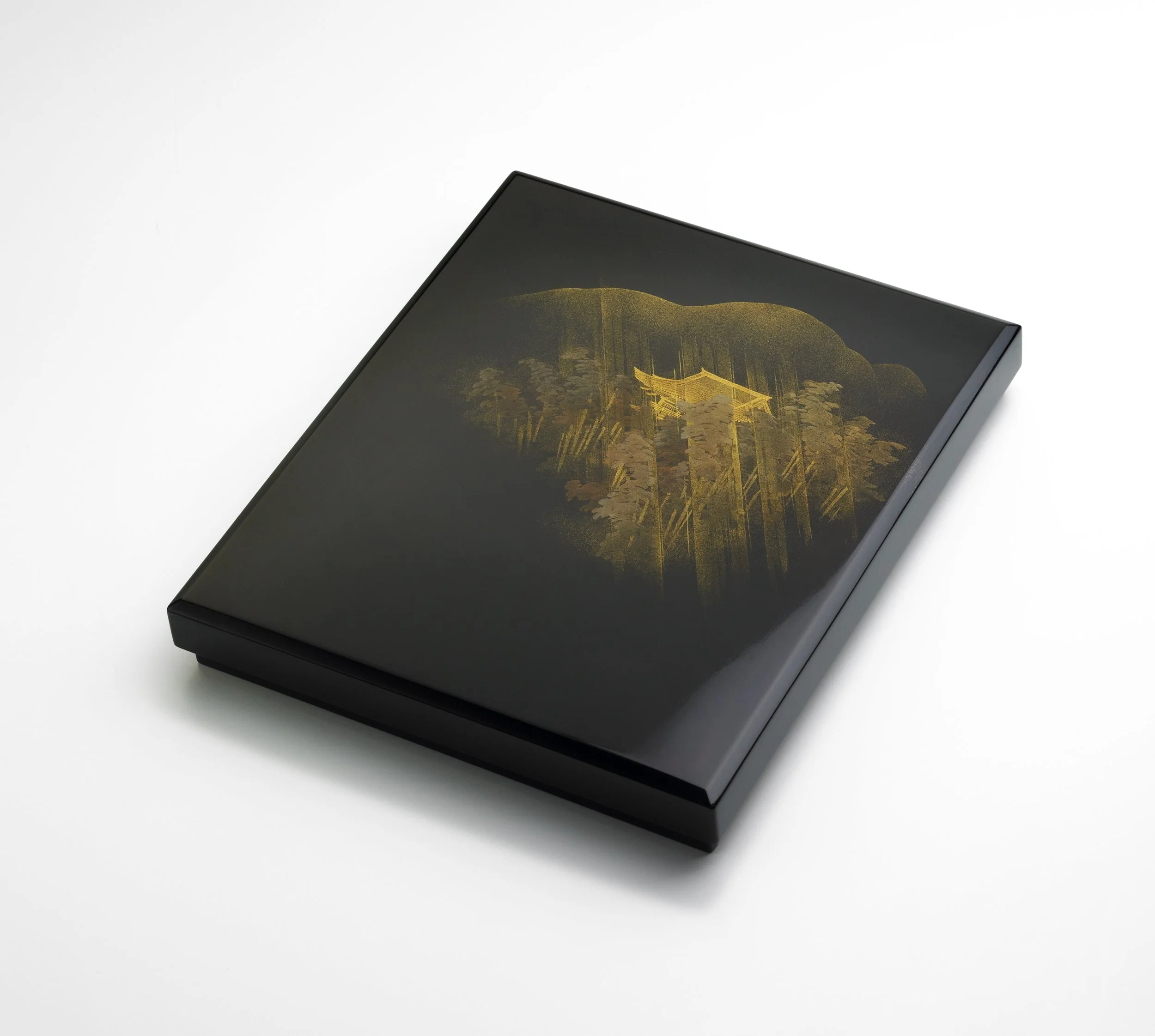
The Shirakawa river flows through Kyoto’s Higashiyama district to join the central Kamo river in the historic geisha district of Gion. On the face of this work we see the Sanmon gate of Nanzenji temple, set against Kyoto’s eastern foothills, enduring a driving night-time rainstorm of late autumn. The design is rendered in the most delicate of togadashie designs that achieves depth and focus using the subtlest of makie techiques. (Initially sprinkling gold powders onto the wet lacquer, the whole is finally covered in a layer of black lacquer which is then meticulously polished back to reveal the design set within a perfect flat mirror-finish)
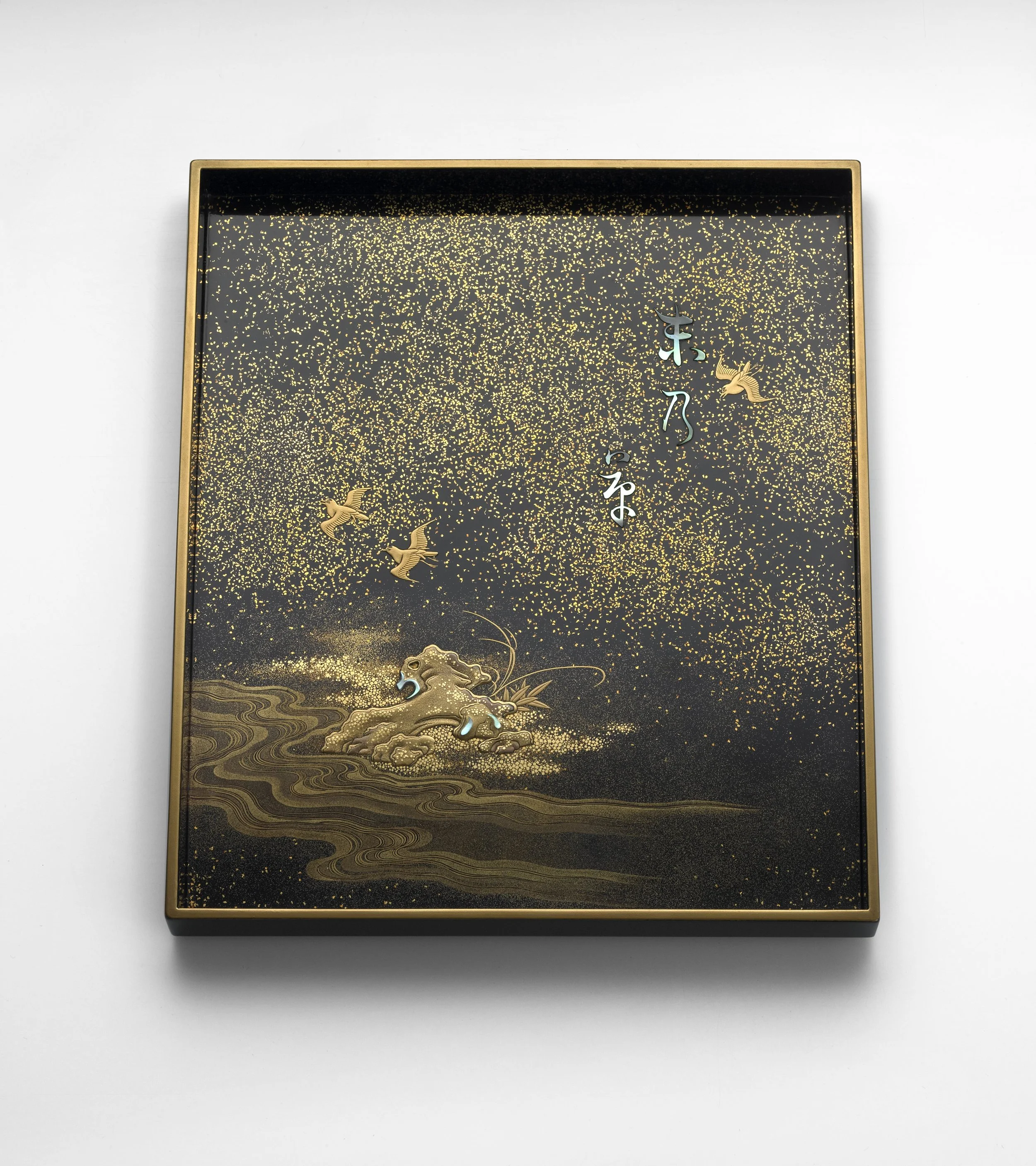
Opening the box and turning the lid reveals a design of three plovers, chidori, swooping over a narrow river flowing around a rocky bank with water plants. Inlaid into the design in lively, finely cut, shell are the characters sue no kusa (grasses)
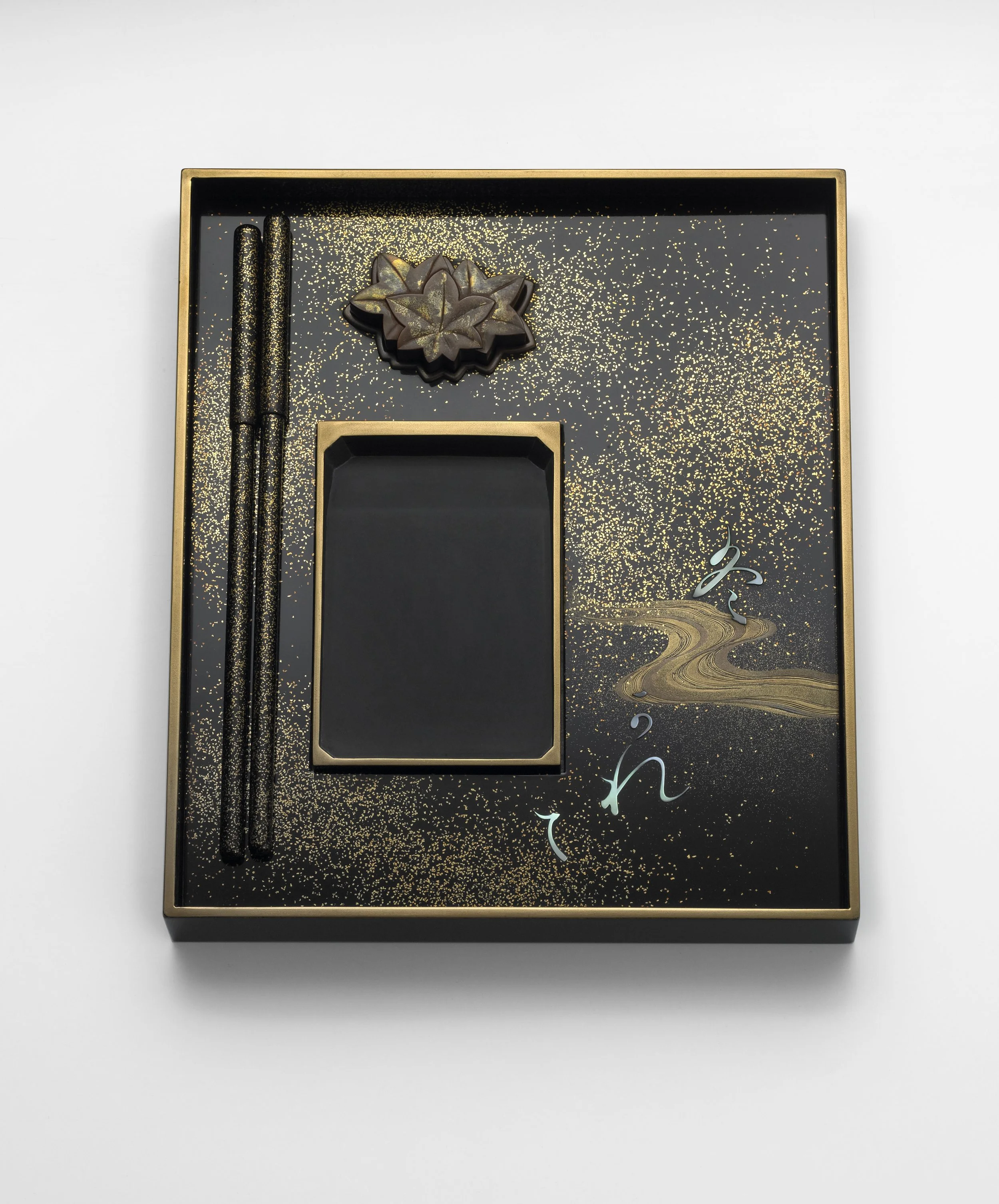
Within the box a loose laid baseboard houses the inkstone, suzuri, and water dropper, suiteki – a gold patinated copper design in the form of three autumnal coloured maple leaves.
Inset into the board are the characters fuyu ga rete (wither in winter) set around the upstream, thinly flowing, river.
The reference is to the dominant Japanese theme of autumn melancholy, when nature, and man, retreat to endure the harsh impending winter.
Within the signed and sealed tomobako the artist has written out the full poem.